Saturday, March 8, 2014

Mesoamerican Ballgame Video

This is a reenactment of what gameplay of the Mesoamerican ballgame probably looked like.

I also found this very informative video about the ball game, but unfortunately Blogger won't let me embed it so here's the link: http://www.youtube.com/watch?v=u4uNfzBEMXw

Friday, March 7, 2014

The Americas Blog Response

This week I looked at Chanel and Katie's blogs.

Chanel gave some information on the origin of the name Olmec that I found very interesting. She said "The name Olmec means 'rubber people' in Nahuatl. It was the Aztec name for the people who once lived in this area, and extracted latex from rubber trees. The word Olmec also refers to the rubber balls, used for the ancient ball game." I hadn't realized that rubber was so important to them before this.

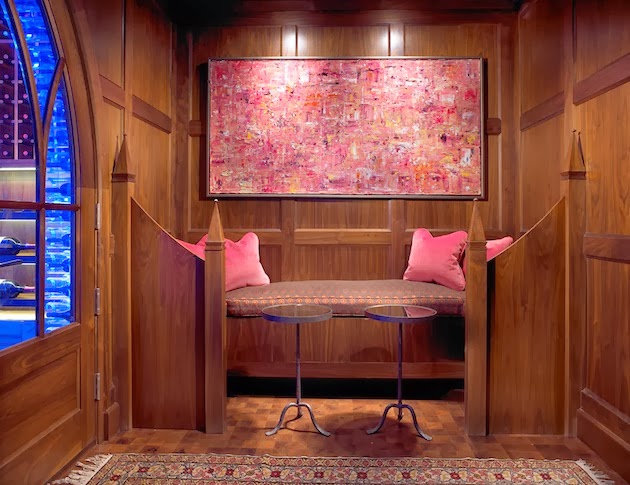
I also really liked this modern Olmec-inspired interior picture that she found:


Katie had written some extra information on the giant stone heads that I didn't know. She said "The Olmec stone heads represented rulers of the time and surrounded the temple area. These 40-50 ton boulders were found in the jungle and the helmets they seem to be wearing are similar to the helmets worn in the ballgame invented by the Mesoamerican people." She also posted a video that talked about how these boulders were considered to be a throne initially and then reused once a new ruler came about to carve their face into the throne. That's really interesting because I hadn't realized that it looked like they were wearing helmets and I also had no idea that they used them as thrones or that they recarved them each time.

Here's the picture she posted that shows how the head looks like it's wearing a helmet.

You can also click here to go to her blog post that contains the video I mentioned above.

The Americas - The Olmecs

What I Learned

A map showing the geographic location of the Olmecs.
The Olmecs were the 1st dominant culture in Southern Mexico and the first major civilization in the whole of Mexico. They existed from about 2000 B.C. to 300 B.C. when they came to a sudden, violent unknown end. The Olmecs developed hieroglyphic writing and the first calendar in the Western Hemisphere. They made realistic artwork, played a Mesoamerican version of a ballgame, and the jaguar was the symbol of their chief deity. They were also the first city-based society with a temple as the focus of the city. The ceremony center of the city consisted of the great pyramid of the earth, a ball court, smaller pyramids, burial grounds, and giant stone heads. 

The stone head carvings are believed to represent a ruler. They were sculpted from basalt boulders and weighed 40-50 tons.

This shows just how large they really are.

Olmec artwork consisted of delicate carvings of jade, rock crystal, and other less valuable stones. They made things such as axe heads, mural paintings, pottery, masks, and other decorative objects. 

Fish vessel
Jade Olmec face mask

Olmec elites lived in highly decorated homes and wore elegant jewelry and clothing while commoners lived in stick and mud "houses," but at least food sources were reliable for the commoners.

The Olmecs were polytheistic, meaning they believed in multiple deities. They became close to the gods through bloodletting and human sacrifices. They also had shamans, people who believed they had a direct contact to a deity, who gave advice about agriculture and periodic rain to the leaders. Religious art included small ceramic figures, stone carvings, and utilitarian pots.

My Favorite Olmec Art

A bird vessel.
One of the Olmec's giant head carvings.
A mosaic at the city of La Venta.
Current Applications of Olmec Design

An Olmec head shows up in a record company's logo.
Olmec head inspired fountain at Playa del Carmen.
Dolce & Gabbana shirt with an Olmec-like design.

Sunday, March 2, 2014

Gothic Blog Response

This week I looked at John and Sammy's blogs.

I liked how John went into details about gargoyles that I didn't see on other blogs. I never realized that gargoyles were originally created for functionality instead of just for looks. It was really interesting to learn that they were originally used as water spouts to drain water off the buildings. It was also interesting to learn that the word gargoyle actually translates to "Throat or Gullet" in English.

A picture showing the functionality of gargoyles from John's blog.


I like how Sammy's blog went into detail about the different arch types. Arches were very important during this time so that was a good topic to write more about. It's also very important to notice the differences between the Romanesque arches and the Gothic arches. Sammy explained that the Romanesque period had more of a rounded arch and that the Gothic arches were more pointed. She also explained that the Gothic churches were intended to look like heaven and light, while in Romanesque the churches were thick, dark, and heavy. I like this explanation of the two because it really helps you see how different they both are even though they both use arches.

Pictures from her blog that show the differences between arch styles:

Romanesque Arch
Gothic Arch

Gothic

What I Learned

Paris was the center of the Gothic world and churches were the center of city life. New rivalries developed between city states and nations and grew into a competition in cathedral construction between the two. This was a period of knighthood, chivalry, and artisan guilds. This was also when the Black plague occurred- a terrible disease that killed 75 million people which was nearly 1/3 of the population.

Religious expression was the heart of design at this time. There was much wealth and power in the church which meant that the popes had a lot of power. Gothic design introduced elements including: pointed arches, ribbed vaults, and flying buttresses. The cathedrals were built to appear weightless and "transcend earthly experience." They had tall walls with a lot of windows including stained glass windows. Rose windows and tracery were very popular on cathedrals during this time.

Rose Window

Tracery

This picture shows some cathedral terms.

Favorite Gothic Architecture


Gothic architecture is so amazing and beautiful. It's hard to believe how large and ornate they are. They definitely do appear to transcend reality.

Current Application of Gothic Design


Sunday, February 23, 2014

Islamic


What I Learned 

Islamic Religion was the foundation of Islamic Design. Mohammad is the figure-head for the Islamic religion and he lived from 570-632 C.E. Mosques served as the central facility for prayer and worship. The first mosque (Mohammad's Farm) was a prototype for all mosques to come. The features of the mosques were: perimeter wall, covered hall of columns, and the courtyard. The purpose of the mosques was to provide a place where many people could come and pray to God by kneeling on a carpet and facing Mecca. 

Horseshoe arches, ogival arches, muqarnas-filled niches, and muqarnas domes are distinctive characteristics of Islamic design. They can be found used inside the mosques and in many other Islamic buildings.


This is an example of horseshoe arches found in the Great Mosque of Cordoba.
This is an example of ogival arches found in the Battle Monastary, or Mosteiro Batalha.

This is an example of a muqarnas-filled niche. It is known as a mihrab and is found in the Tiled Kiosk Museum in Istanbul.
This is an example of a muqarnas dome in the Alhambra Palace.
Muqarnas are a type of architectural ornamentation that are reminiscent of stalactites or honeycomb. They were developed around the middle of the 10th century in northeastern Iran and they take the form of small pointed niches, stacked in tiers which project beyond lower tiers. They are commonly constructed of brick, stone, stucco, or wood,  and are clad with painted tiles, ood, or plaster. They are typically applied to domes, pendentives, cornices, squinches and the undersides of arches and vaults.

The Taj Mahal is a famous example of Islamic Design. It was built from 1632-1648 C.E. It was commissioned by Mughal Emperor Shah Jahan after the death of his favorite wife, Mumtaz Mahal. It was seen as an earthly replica of the house of Mumtaz in paradise.

The Taj Mahal
My Favorites From This Time Period


I love so much about Islamic design. It is extremely beautiful and intricate. I love the use of gold and the deep blues that can be found in some places. I also find design elements such as the muqarnas fascinating. They are just so intricate and beautiful.

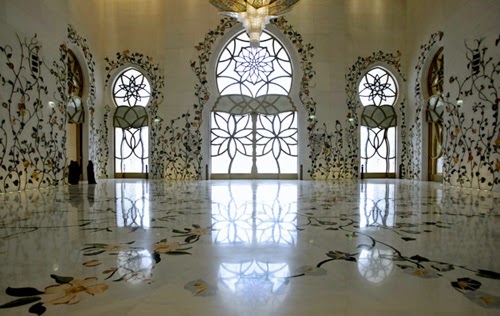
Modern Interiors Using Islamic Design


Romanesque

What I Learned About the Romanesque Period

Charlemagne was crowned emperor of the Roman Empire in 800. He encouraged learning and the arts and preserved and copied Roman literature. He also established schools and monasteries and encouraged building using the technology of Roman structures. Before 1000 AD not a lot of architecture was built, but with the strong religious movement that was brought on at least 1,587 churches were built between 1000 and 1100. Some typical features of the Romanesque churches included semicircular arches and vaults. They were based off plans from the Early Christian basilicas and had a nave, transept, and apse that were modified for better space. There was also a side chapel added in the transept. Romanesque churches had roofs that were made of masonry rather than wood. Their walls were painted with rich greens, blues, purples, and gold. They also were decorated with rich tapestries and gilded sculptures and their bibles, chalices, and other accessories were gold, silver, and ivory set with rubies, emeralds, sapphires, and pearls. They were very ornamental.

Romanesque homes were primitive and made of wood, mud, twigs, dirt floors, and had little light or warmth. Nobility had castles that were made of stone but they could be drafty, wet, and dark so there was a center fire in the great hall. Their structure was wood, though, so not many survived.

My Favorite Romanesque Architecture

This is the Angoulême Cathedral in France. Its facade is richly decorated with architectonic and sculptural forms. I love all of the intricate details and the repetition of the arches.
http://upload.wikimedia.org/wikipedia/commons/a/ac/LimburgerDomFront.jpg
This is the Limburg Cathedral in Germany. I love all of the gold accents and the beautiful rose window. It kind of reminds me of a clock tower or something you'd see in Disney's "It's a Small World."
File:Rooma 2006 047.jpg
This is a cloister of the Basilica di San Giovanni in Laterano, Rome. I love all of the different columns. Each is so unique and  I especially love the ones that look like they are all twisted up.
Current Application of Romanesque Design

Caesar's Palace in Las Vegas is a perfect example of a modern application using Romanesque Design. It uses pendentives, arches, and domed ceilings characteristic of this time period. These are pictures I took when I visited it.


Photo